

How social is rewriting the script on television
....and TV producers are learning to think like social media strategists
Show of hands—how many of you’ve seen a celebrity walk through Jennifer Hudson’s Show Spirit Tunnel? Or John Oliver eviscerate a politician? Now, how many of you saw that on social v. live TV?
Whether it’s the result of our modern-day lives or the way we consume information today, the reality is here to stay—television isn’t just on TV anymore. It’s quite literally in the palm of your hand.
For many, especially younger audiences, shows live online more so than on TV. This, in turn, has transformed social media into a hub of culture, conversation and fandom. This shift is so powerful that networks are rethinking the status quo. They’re compelled to reshape how they approach content, including casting and promotion, to stay relevant.
From casual viewing to active engagement
Saturday Night Live is defined by its iconic sketches, celebrity hosts and opening monologues. But the secret to the show’s longevity is its constant evolution to keep up with its audience. Recently, SNL took another step in that direction.
The show announced five new cast members, most prominently, Canadian comedian and Instagram star, Veronika Slowikowska (@veronica_iscool), who has over 1 million followers. In doing so, the show is meeting its audience where they are, becoming a conduit between TV and the cultural conversations unfolding on social.

This isn’t a random decision. SNL producers know that today, Reels, Instagram followers and TikTok clips are just as powerful and important as their iconic sketches and monologues.
The message is clear. The show is angling for a younger, social-savvy audience—one that consumes content with a scroll and emotionally invests in fictional characters, even if they’re not sitting for an hour at a stretch in front of a television at 11:30 p.m. on Saturdays.
Another example of social dominating television decisions is the online backlash Disney+ and Hulu faced when ABC canceled Jimmy Kimmel Live! The decision was short-lived, and the show was brought back. Much of it because of the overwhelming demand by audiences who weren’t ready to say goodbye yet (and were prepared to cancel their streaming subscriptions over it).
The move signals a recognition that the time of passive viewership is over.
Audiences are online, talking about their shows, dropping trivia and sharing opinions. More importantly, they’re increasingly watching their favorite shows only through social media.
SNL and Jimmy Kimmel Live! are just the tip of the iceberg.
They’re highlighting a bigger truth—that television producers can no longer afford to ignore audiences making their voices heard loud and clear on social.
The new TV ecosystem: Online culture is shaping what we watch
Data proves social media is now the primary way most people watch TV. Sprout’s Q3 2025 Pulse Survey reports 51% of consumers either follow shows exclusively on social media or track both the show and the social conversation. Among Gen Z, over a third rely entirely on social platforms to stay updated.
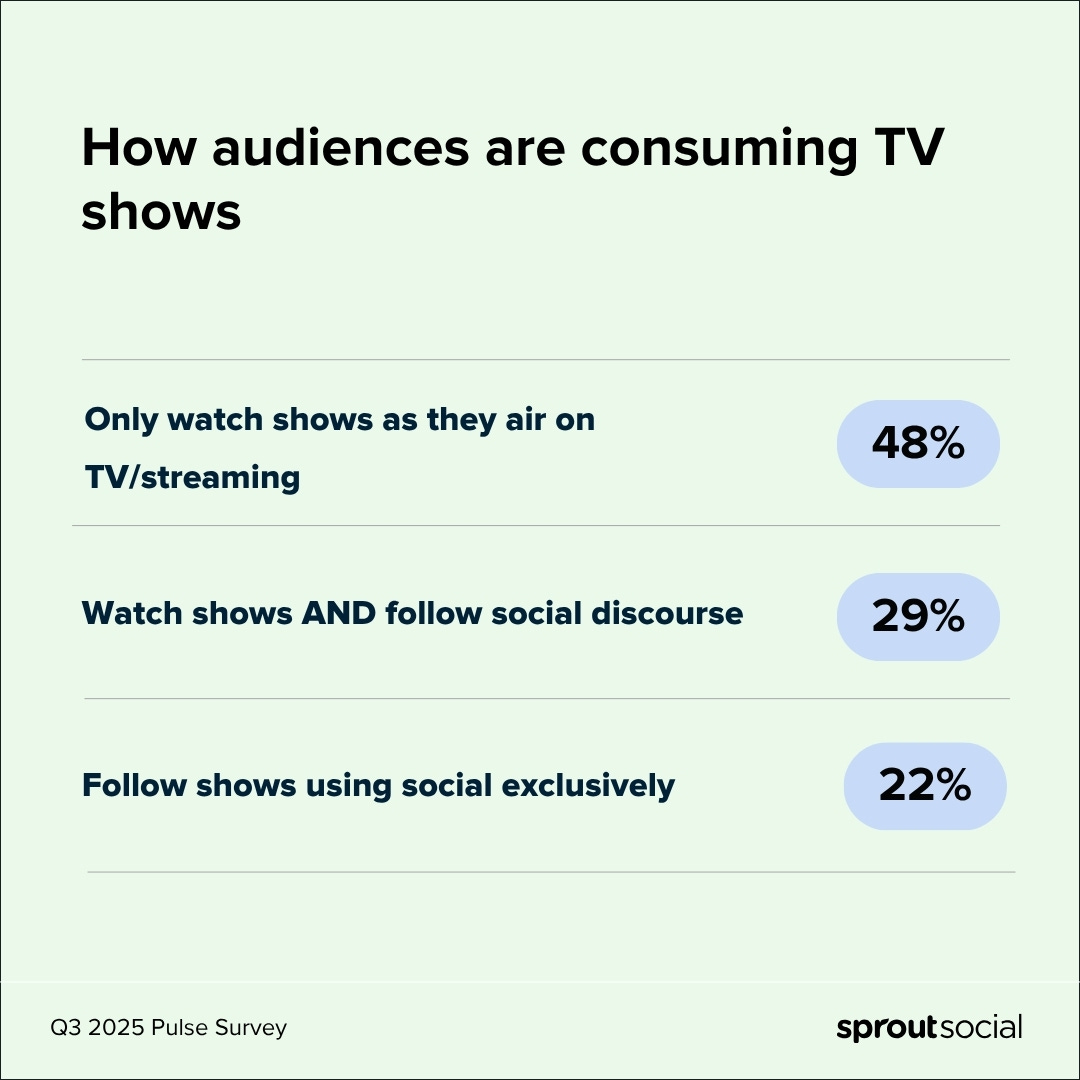
The breakdown by demographic further underscores this trend:
Gen Z: 40% watch and follow discourse, 36% follow exclusively on social
Millennials: 38% watch and follow, 28% follow exclusively
Parents: 38% watch and follow, 28% follow exclusively
The takeaway? Most audiences want a more immersive experience when they watch their favorite shows on the telly.
The fact is, TV shows have long dominated pop culture, everyday conversations and water-cooler moments. What’s changed is where that engagement happens. Much of today’s TV viewing experience unfolds on social networks, right alongside the discussion itself. What used to be a one-way television-to-social conversation has now converged.
With boundaries between mediums fading and creative lines increasingly blurred, brands are now restructuring social teams as writers’ rooms. Some are even hiring in-house comedy writers.
They’re also producing their own TV shows on social. For example, Tarte Cosmetics’ show on Instagram, Tarte Interns. With a string of episodes based on fun themes like reality TV and the Olympics, it’s very popular with audiences, drawing consumers into content that keeps them coming back for more.

Conversely, television producers are using social media to revive viewer engagement for everything entertainment. It’s dawned on them that even Award shows that may have previously lost luster can get a new lease on life when social is thrown in the mix.
Glambot, anyone?
Glambot’s behind-the-scenes footage of its stunning, slow-mo videos has turned it into a highly anticipated highlight of red carpet experiences. Not to mention, putting once-declining award shows back on people’s watch-list.

The new normal: Traditional ratings are no longer enough
Sound bites analyzing shows like The White Lotus or viral TikTok audio clips from The Summer I Turned Pretty are creating cultural moments that transcend the original broadcast. This shift is also affecting how success is measured today.
It’s wild that a 13-second TikTok set up to reveal the finale from The Summer I Turned Pretty Season 3 finale clocked 5.1M views. Here’s the kicker, though: There was no reveal. Contrary to the rationale, this didn’t dissuade audience sentiment. Rather, conversations revealed how invested viewers are in the show and will continue to be.

These online discussions matter as much as, if not more than, live viewership numbers. Shared, commented on and remixed (like Netflix’s “Moment” feature that allows fans to save, watch and share favorite scenes from shows), this phenomenon is making social media a primary lens through which television is consumed.
The bottom line is, traditional ratings aren’t enough any longer. They simply don’t tell the whole story. Today, social engagement, mentions and viral moments determine a show’s cultural impact. And tapping into them is the only way to ensure a show remains on top.
Whether it’s network TV or streamers like Netflix and Apple TV, producers have to lean into social data to stay relevant to audiences who are emotionally invested and amplifying those feelings online.
Audience behavior is changing—and producers are paying attention
This new territory comes with implications for producers and marketers alike. Content must be “shareable” and culturally relevant because only then can it spark conversation beyond the broadcast. Ignoring social media isn’t an option.
That’s why television producers are increasingly designing content with social media in mind. Like SNL, this can be seen in casting choices, marketing campaigns and even plot structures.
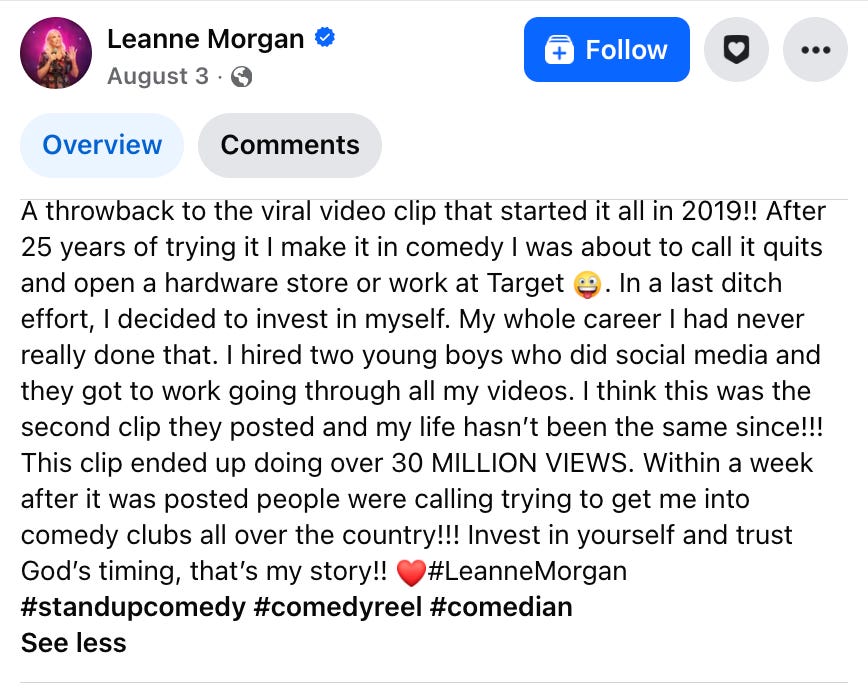
So there are no surprises that Leanne Morgan went from a stand-up comic whose videos you’d watch on Facebook to getting her own show, Leanne, on Netflix.

Leanne credits her breakthrough to a Facebook video that went viral in 2019.
Struggling as a comic who’d been on the scene for 25 years, it was her viral social clip that garnered 30 million views that turned the tide in her favor.
Social media wields major influence over human behavior, attention and engagement, transcending geography, ethnicity and age. And producers are taking note, pulling people and trends from the social zeitgeist into their work to drive brand connection. From Netflix’s Stranger Things, to the return of Reading Rainbow with a TikTok star host from everyone’s beloved Sesame Street, Hollywood is taking cues from social conversations.
It’s not surprising then that Tareasa “Reesa Teesa” Johnson’s viral TikTok series ‘Who TF Did I Marry?’ is being turned into a TV show. With over 450 million impressions across social media, a TV show seems to be the natural progression.

TV producers are (finally) beginning to mirror social media strategists
In a world where viewers may never watch a full episode live—but will engage with every viral clip—TV producers are beginning to think like social media strategists.
They’re realizing the influence social extends beyond traditional TV networks. It’s not coincidental that YouTube garners more viewership on television than streaming networks and cable TV, highlighting the growing importance of digital-first content.
Audiences have much more control than ever in choosing what to watch, how to consume it and where to join the conversation. What you’re seeing on television is a culmination of not just what networks want to produce, but what we as the audience have collectively chosen.
Whether it’s SNL’s new cast or nostalgic show revivals, the learning here is that no brand or industry is immune to what audiences want. And what people want can be easily discovered by listening to what they’re saying on social.